Delphi Define Directive
 Mesothelioma Law Firm, How To Donate Car to Charity California, Asbestos Lawyers, Structures Annuity Settlement, Car Insurance Quotes Colorado, Annuity Settlements, Nunavut Culture, Dayton Freight Lines, Donating a Car in Maryland, Illinois. Download video dangdut koplo bugil • Download VIDEO: Famous Dex 223 (WSHH Exclusive - Official Music Video) mp4 3gp mp3 • Download VIDEO: Lil Baby Feat.
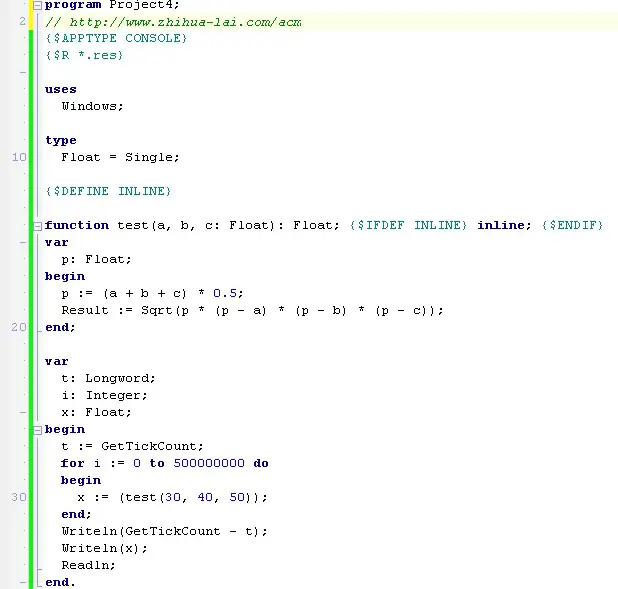
Other answers have pointed you at the places to define symbols and the scope implications of the different approaches. However, what no-one has yet mentioned is that if you change the DEFINE symbols you MUST do a FULL BUILD of your project for them to have any effect on your code. When you 'Compile' the Delphi compiler will only compile units which have themselves changed since the previous compile. If you change DEFINE symbols this doesn't change any project units, so if the units are not re-compiled then the change in DEFINE symbols will not have ANY effect in those units. To FORCE changes in DEFINE symbols to be applied in ALL units, you MUST 'build', not compile. This may explain why your attempt to set defines did not appear to work previously.
There are two places where you can put conditional defines that are used in all units of a project:. in the project options (as David Heffernan already said). in an include file that is included in all of these units Why do I mention the second option? Because it allows specialized processing based on the VERxxx conditional define and other conditional defines given in 1. See jedi.inc (from the Jedi JCL) for an example.
Also, as Deltics said: When it determines which units to recompile, the compiler only checks whether the unit itself has changed, not whether the conditional defines or any include files have changed. So if you change conditional defines, you must do a rebuild, not just a recompile. Since the Delphi compiler is very fast, this fortunately does not make much of a difference for compile times.
#define Directive (C/C). 4 minutes to read.
Contributors. In this article The #define creates a macro, which is the association of an identifier or parameterized identifier with a token string. After the macro is defined, the compiler can substitute the token string for each occurrence of the identifier in the source file. Syntax #define identifier token-string opt #define identifier ( identifier opt., identifier opt ) token-string opt Remarks The #define directive causes the compiler to substitute token-string for each occurrence of identifier in the source file. The identifier is replaced only when it forms a token. That is, identifier is not replaced if it appears in a comment, in a string, or as part of a longer identifier. For more information, see.

The token-string argument consists of a series of tokens, such as keywords, constants, or complete statements. One or more white-space characters must separate token-string from identifier. This white space is not considered part of the substituted text, nor is any white space that follows the last token of the text. A #define without a token-string removes occurrences of identifier from the source file. The identifier remains defined and can be tested by using the #if defined and #ifdef directives.
The second syntax form defines a function-like macro with parameters. This form accepts an optional list of parameters that must appear in parentheses. After the macro is defined, each subsequent occurrence of identifier( identifier opt., identifier opt ) is replaced with a version of the token-string argument that has actual arguments substituted for formal parameters. Formal parameter names appear in token-string to mark the locations where actual values are substituted.

Each parameter name can appear multiple times in token-string, and the names can appear in any order. The number of arguments in the call must match the number of parameters in the macro definition. Liberal use of parentheses guarantees that complex actual arguments are interpreted correctly. The formal parameters in the list are separated by commas. Each name in the list must be unique, and the list must be enclosed in parentheses.
No spaces can separate identifier and the opening parenthesis. Use line concatenation — place a backslash ( ) immediately before the newline character — for long directives on multiple source lines. The scope of a formal parameter name extends to the new line that ends token-string. When a macro has been defined in the second syntax form, subsequent textual instances followed by an argument list indicate a macro call.
Delphi Global Define Directive
The actual arguments that follows an instance of identifier in the source file are matched to the corresponding formal parameters in the macro definition. Each formal parameter in token-string that is not preceded by a stringizing ( #), charizing ( #@), or token-pasting ( ##) operator, or not followed by a ## operator, is replaced by the corresponding actual argument. Any macros in the actual argument are expanded before the directive replaces the formal parameter. (The operators are described in.) The following examples of macros with arguments illustrate the second form of the #define syntax: // Macro to define cursor lines #define CURSOR(top, bottom) (((top).